
Contents
Martyrdom Anniversary of 'Ayatollah Morteza Motahhari'
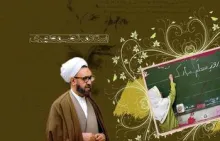
Morteza Motahari was born in Fariman village, 31st January, 1919. His father, Sheikh Mohammad Motahari who had completed his studies in Najaf was one of the leading clergies of Fariman.
Early Childhood Education
Introduction
All children have the right to education - a right that is expressed in the Universal Declaration of Human Rights and the UN Convention on the Rights of the Child and defended by EI within the framework of its global action campaign for accessible, free quality public education for all. Early childhood education (ECE) must be seen as an integral part of this right
Education for All
Introduction
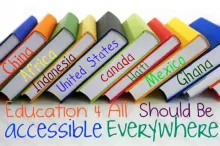
One of the principal aims of Education International is to promote the right to education for all persons in the world. EI advocates for free quality public education for all. EI believes that education is a human right and a public good which should be accessible to all. It is the responsibility of public authorities to ensure that every child, youth and adult has access to high quality education appropriate to his or her needs. EI supports the Dakar Education for All (EFA) targets and the Millennium Development Goals (MDGs) agreed in 2000 and has been consistently campaigning for their achievement by 2015.
Characters common to all humans according to Imam Baqer (AS)
- Imam Baqer (AS): Allah (SWT) has not allowed any human to ignore the following 3 characters;
Preserving Values of the Revolution is of Duties of Education
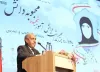
"Celebrating an effective faithful virtuous champion student denotes that he or she must be taken as a role model by teenagers and the youth of the country" said Dr Aliasqar Fani, Minster of Education in a memorial ceremony of martyr Mahbubeh Danesh, a girl student.
Destructive Impact of Non-standard Textbooks on Students Learning
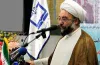
Hojjatoleslam Dr Mohammadian listed various products of the OERP counting textbooks for all subjects of all grades and educational packages including Roshd Magazines, CDs, educational films, audio books, teacher guides and teaching strategy films.
First General Meeting of OERP Staff
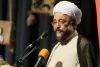
According to the OERP Public and International Relations, in the first OERP general meeting of staff, Dr Mohyeddin Bahram Mohammadian wished a happy new year for everyone. He expressed his pleasure for being with the colleagues past the new year holidays and reminded the motto of the year as being "nation-state: empathy and conversation".
OERP Sets Technical and Vocational Education Standards
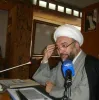
In an interview with Tasnim News Agency, Hojjatoleslam Mohammadian said, "last year, Bureau of Compiling Primary and Theoretical Secondary Textbooks completed 20 newly compiled textbooks for grades four and eight together with appropriate learning packages" reported by the OERP Public and International Relations.
He added," 58 titles of textbooks were compiled for technical and vocational education courses along with appropriate standards while in the field of printing, approximately 124 million volumes were published and distributed this year".
OERP Sets Technical and Vocational Education Standards
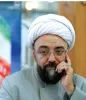
In an interview with Tasnim News Agency, Hojjatoleslam Mohammadian said, "last year, Bureau of Compiling Primary and Theoretical Secondary Textbooks completed 20 newly compiled textbooks for grades four and eight together with appropriate learning packages" reported by the OERP Public and International Relations.
He added," 58 titles of textbooks were compiled for technical and vocational education courses along with appropriate standards while in the field of printing, approximately 124 million volumes were published and distributed this year".
OERP Utilizes External Collaboration
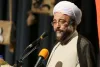
Dr Mohyeddin Bahram Mohammadian said in an interview with Mehr News Agency, "we have started to create the contents of textbooks of grade ten in collaboration with external groups because of the bulk of work to be done" reported by the OERP Public and International Relations. "This year, he added, we will complete compiling textbooks for grades five and nine together with quality learning packages."
The Experiences of Teachers Participating in the Overseas Schools Assignment Exam
To gain some insight into the experiences of those teachers who
The Use of Educational Humor in the Process of Learning and Teaching: A Special Facilitator for Second Language Learners
Research on educational humor during the past two decades demonstratesboth the role and the impact of humor on the processes of learning and teaching, especially in the area of second/foreign language learning. There are a number of theories giving different definitions and leading to a variety of strategies f
or the use of humor in the classroom.
The Nature of Comparative Research in Philosophy of Education: Faaraabee's Method
Comparative research, from a philosophical perspective in
education, goes beyond the mere comparison of two ideas or subjects, and necessitates both judgment and critical analysis. Considering the complexities of the educational processes, doing comparative research in educational philosophy requires certain skills and conditions to be met.
The Status of NationalReligious Identity in High School Farsi Textbooks
To discover the extent to which the subject of nationalreligious
The Effects of Quantitative and Qualitative Evaluation on Fourth Graders Anxiety
The type of educational evaluation can affect anxiety among other
variables. That is why the Iranian educational system has recently adopted a new type of evaluation, called qualitative evaluation in contrast to the old quantitative approach. To show the difference
The Role of Student and School Variables in Reading Performance among Those Participated in PIRLS 2006
To determine the role of student and school variables in reading
performance, the data on Iranian fourth graders who participated in
The Use of Emotional Regulation Strategies in Reducing Test Anxiety during Test Taking
It is well known that the use of emotional regulation strategies can
SRPRI to Hold 9th Conf. to Commemorate Molla Sadra
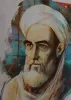
The Sadra Islamic Philosophy Research Institute has called the academicians and experts to participate in its 19th conference to commemorate Molla Sadra of Shiraz.
An interview with Dr Hassan Setayesh on the Islamic revolutionary virtues in the national curriculum of Islamic republic of Iran.

For a long time, many Iranian citizens are concerned with educational system educating students not sufficiently according with the aims of Islamic revolution or the expectations of the educational system in the Islamic republic of Iran. Now we have an interview with Dr Setayesh , The member of the Quranic studies and technics faculty about the status of Islamic revolutionary virtues in the national curriculum of Islamic republic of Iran and conveying them to school students.
1st international seminar on Algal Technologies for Wastewater Treatment and Resource Recovery

Delft, The Netherlands On 9 April 2015, UNESCO-IHE organizes the 1st international seminar on Algal Technologies for Wastewater Treatment and Resource Recovery.