
Curriculum Transformation Scheme: Moving from Textbook-Centered to Program-Centered Approach
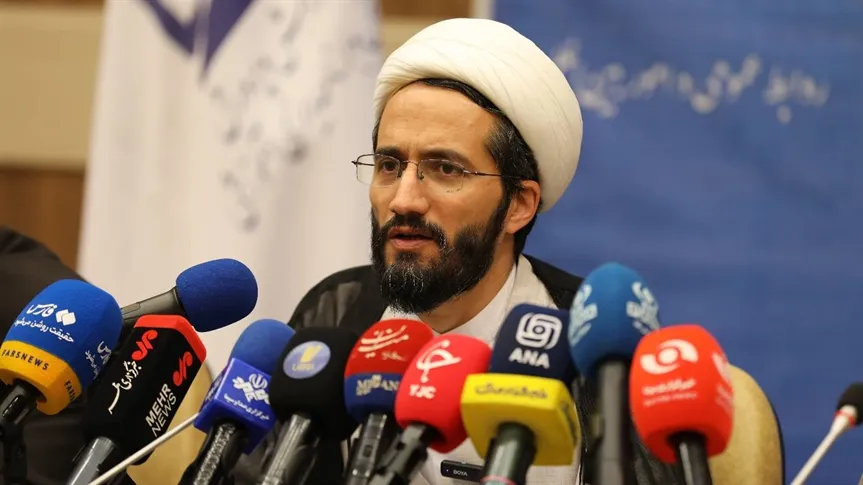
According to the Public Relations and International Affairs Office of the Educational Research and Planning Organization, Ali Latifi, referring to the main mission of the Educational Research and Planning Organization, stated that this organization is responsible for designing and developing curricula based on the transformative documents of the Ministry of Education, and in recent years, it has developed a comprehensive roadmap for curriculum transformation. He added that this roadmap was designed in eight steps and, after completing the study and preparation phases, entered the implementation phase last year. This year, for the first time, the macro-project of the curriculum transformation scheme has started from the first grade of elementary school and will gradually expand to other levels.
Moving from Textbook-Centered to Program-Centered Approach
The Head of the Educational Research and Planning Organization emphasized that in the country's educational culture, the concept of curriculum transformation has often been limited to changing textbooks, which is an incorrect understanding.
He clarified that the curriculum, in its precise meaning, is the map for education and learning in schools; a map based on which all educational and pedagogical activities of the school should be organized. According to him, the organization's focus is on correcting this mindset and moving the educational system from a "textbook-centered" to a "program-centered" approach so that schools can design their educational activities with creativity and flexibility, tailored to the needs of their students.
Three Key Services for Implementing the Curriculum Transformation Scheme
Latifi, by explaining the main components of the curriculum transformation scheme, enumerated three key services provided by the organization to schools: First, providing the School Curriculum Operational Guide, which outlines the framework for actions, activities, and educational goals, and allows schools to design their own comprehensive education and learning map. Second, providing new education and learning packages, which include revised textbooks and multimedia content for schools to utilize within the framework of the school-based curriculum. Third, establishing a system of scientific support for schools in the process of program implementation, aimed at monitoring, correcting, and supporting schools on the path to effective curriculum implementation.
He added that the pilot implementation of this scheme is currently underway this year in eight schools and in the first grade of elementary school, and next year its scope will expand to more provinces to gradually reach the nationwide implementation stage.
Revision of Technical-Vocational and Technical Branch Textbooks
The Head of the Educational Research and Planning Organization, in another part of his speech, referred to developments in the technical-vocational and technical branch fields and stated that the Ministry of Education is the largest institution for workforce training in the country, and accordingly, revising the disciplines and resources of these branches was necessary.
He announced that last year, more than 30 technical-vocational disciplines were evaluated, and based on the results, fifty-five new textbooks for technical-vocational and technical branch disciplines have been produced this year.
Innovation in Educational Content; From Handwriting to Artificial Intelligence
Latifi, referring to a series of content changes in textbooks, stated that this year, the "Cursive Writing" textbook for fourth-grade elementary students will be implemented nationwide; a plan designed to improve the quality of students' handwriting and strengthen their writing skills.
He also announced the pilot implementation of a new religious studies textbook for the first cycle of secondary education titled "From Me to God," which is written with a narrative approach and language appropriate for adolescents.
According to Latifi, the sixth-grade "Work and Technology" textbook has also been revised, and a new chapter focusing on "Artificial Intelligence" has been added to it. Furthermore, in technical and vocational disciplines, a book titled "Fundamentals of Artificial Intelligence" has been compiled as an elective course.
"Exciting Classroom" Educational Package for Teacher Empowerment
The Head of the Educational Research and Planning Organization announced the unveiling of the "Exciting Classroom" educational package in the presence of the President, stating that this package was prepared in line with the government's emphasis on empowering teachers in modern teaching methods.
According to him, the content of this package includes instructional videos and teaching samples in three areas: creating a positive and motivational learning environment, using modern technologies including artificial intelligence in education, and employing active teaching and learning methods such as game-based learning and flipped classrooms. This package is now available to teachers nationwide on the Roshd Network.
Educational Packages for Students' Narration of National Events
Latifi continued by pointing out the necessity for the Ministry of Education to pay attention to national and educational events and announced the production of an educational package related to the 12-day war incident. This package is designed for three educational levels: elementary, lower secondary, and upper secondary school, and its goal is to provide a context for students' dialogue, understanding, and narration of this event.
According to him, this package will be distributed in schools by Students' Day, and teachers and administrators can use its content in educational and cultural activities.
Support for Cultural and Media Productions for Students
The Head of the Educational Research and Planning Organization announced the reactivation of the Council for Supporting Children and Youth Films and stated that over the past year, more than forty-five films suitable for this age group have been reviewed and recommended for screening in schools.
He also announced the review and organization of over 3,700 titles of educational and supplementary books and the annual publication of ten million copies of Roshd magazines.
Roshd Festivals; Linking Education, Art, and Technology
Latifi announced: This year, the Roshd Film Festival, Electronic Content Production Festival, Roshd Book Festival, and Roshd Illustration Festival will be held with a new approach and up-to-date content. According to him, over twenty thousand works from educators and students have been received for the Roshd Electronic Content Production Festival, indicating the dynamism and creativity in the field of digital education.
On the Path to Consolidating Transformation
The Head of the Educational Research and Planning Organization finally emphasized that creating creative and active schools requires changing the track of the educational system from textbook-centered to program-centered, and the media play an important role in explaining and building discourse around this transformation. He expressed hope that with the continued implementation of the curriculum transformation scheme, the Ministry of Education would move towards school-based management, parental participation, and nurturing a capable generation suited to the needs of the new era.
Add new comment